I guess it's fairly obvious that I've got a lot on my plate these days, so to speak, and my writing has taken a back seat to more important ventures. I do still cook, once in awhile (last week produced a kabocha and eggplant mulligatawny of sorts, spicy with curry and cardamom, with coconut milk for body), and this time of year I still think about treks to spongy woods, even in my compromised mobility and subsequent preference for the sloth of a warm couch and chenille throw.
Thank goodness, then, for store-bought chanterelles and Langdon Cook. Some of you might know his blog, Fat of the Land (I've had him linked on my sidebar for some time now). His new book of the same name has recently been published and is now available for sale on Amazon. Cook is a modern, urban male indigenous to an opposite coast where clams are fried, not dug. Relocated to the Pacific Northwest for graduate school, he met a fascinating young poet with an ear to the wind and an eye to the ground, and by her beauty, found himself rapt. In a comically-told recollection of her contempt at his efforts at a woo with a reconstructed fast food breakfast sandwich (""I don't do McDonald's", she said dryly"), his now wife and twice-babymama opened the door to a world that would clearly become a new passion for Cook.
Langdon Cook is no latter-day Euell Gibbons, and Fat of the Land - Adventures of a 21st Century Forager is no Stalking the Wild Asparagus. More than simply a field guide to modern locavory, FotL is a series of witty vignettes that are really about the people and places that have informed his passion - they all just happen to involve the hunt for "foods that don't run away." These are forthright tales of character-building trial and error (smashed shells of many razor clams before hitting limit), of humility at the smallness of men in an unforgiving landscape (and fast tides that fill slow boots with icy water), and thankfully, of hard-won triumphs (even if those triumphs are later rudely stolen in the middle of the night by greedy raccoons and must be re-won the following day). And more than a gatherer of popular and less-loved wild foods alike, Cook is clearly a writer.
Each story is about one ingredient and ends with a recipe for that ingredient. This afternoon, as I finished reading Fat of the Land, I was stricken with the coincidence that tonight's dinner, for which I had shopped only an hour earlier, was only one or two ingredients away from the last recipe of the book: creamy chanterelle pasta. Instead of peas to add color, though, I added pea shoots, my pasta was a gnocchi and I added toasted pumpkin seeds for added protein and seasonal crunch (Lang uses bacon and bowtie pasta in his rendition, and while this year I happily coughed up $8/lb for my chanterelles, I doubt he ever pays for a mushroom).
Gnocchi with Chanterelle-Pea Shoot Cream Saute a minced shallot and a clove of garlic in a bit of butter and olive oil. Add a handful of clean chanterelles, torn into bite-sized pieces. When mushrooms have released their liquor and start softening, add cream, a few tbsp of fresh thyme, a few good scratches of nutmeg, salt and pepper to taste. Simmer for a minute, then add a handful of pea shoots and an 10oz package of gnocchi (cooked), and toss together until pea shoots are wilted. Top with toasted pumpkin seeds and copious amounts of Parmigiano Reggiano.
Buy Fat of the Land.

Friday, October 02, 2009
Living off the fat of the land


Sunday, March 29, 2009
Foodbuzz 24, 24, 24: Out of This Nettle, We Grasp This Dinner


 Spring has officially sprung, and I was so tickled to take my first little stroll down to the forested wetlands at the nearby Reed College campus during an early break in the vernal rains. This time of year is my chance to shake the last of the doldrums of the wan winter pallor, to ditch some of the root vegetable stodge and to taste the first bosky flush of the equinox.
I was delighted, then, that my proposal to prepare a nettle-based dinner was sponsored by Foodbuzz. Having spontaneously submitted my idea as a sudden burst of inspiration, I'm thrilled that our friends at Foodbuzz wanted to help me share it with the food blogging community for the March 24, 24, 24 event.
 (from left) Me, Carolyn and Greta
Although I am a botanist by training (and the trade pays the bills), I take so much pleasure in my city life when I'm off the clock. I love going out to fancy dinners with Scott, going out for a movie or to see a favorite band. But I especially love putting on some hot pink lipstick, a skirt and heels and hitting the bars with my similarly city-loving girlfriends. My girls like good food, but don't necessarily love the idea of grubbing around in the swamp to pick their ingredients.

Stinging nettles (Urtica dioica) grow in swampy places and riparian corridors along streams throughout North America, Europe, Asia and northern Africa. They resemble a mint, though they're in their own botanical family (the Urticaceae). They're easily identified by their pairs of deltoid (slightly triangular), dentate leaves (opposite-decussate in orientation) with fine spines covering the stems and leaves. In the Pacific Northwest, March is when they first poke their little heads out of the alder and cottonwood duff in search of spring's first warming sun. This time of year, too, is when they are at their most tender and nutritious. Nettles are an excellent source of protein, iron and vitamins C and A.

True to their moniker, they do pack a potent sting, delivered mercilessly by the fine, silicate trichomes which act as tiny syringes. The sting comes from the combination of histamine, serotonin and formic acid (similar to the venom injected by stinging and biting formicine ants). The pain is a sharp, tingling sting, and on my skin, leaves small white bumps with reddish swelling. To avoid this, always wear gloves when picking, use a salad spinner and tongs to wash, then blanch the greens in salted water to neutralize the venom before eating.
Rather than haphazardly add nettles to ordinary foods to bolster their nutritional content, I really wanted to showcase the nettles as a primary flavor in a variety of dishes. I put together a menu that would spotlight the stinging nettle in myriad ways:
mixed greens with Granny Smith apples, crumbled smoked fontina and honey-nettle vinaigrette
lamb steak and pan-roasted baby potatoes with nettle pesto
nettle gratin with Pecorino and nutmeg cream
 While I prepped dinner, we enjoyed a light cocktail that I created and named the Caddisfly Nymph (after the little water bug upon which salmon and trout feed, and an indicator of healthy streams): 6 oz of Prosecco with a half ounce of elderflower syrup (sold as Flädersaft at Ikea) and a tiny splash of Peychaud bitters (for pinkness and herbal twang). It's flora and girlishness in a glass.
 Nässelsoppa is a traditional Scandinavian nettle soup, though I tweaked it slightly by adding cream to the freshly-made chicken stock for richness and body. I sauteed onions and garlic in cultured butter until softened and translucent, added the nettles and chicken stock and simmered until tender (about 15 minutes). I added a glug of heavy cream and some chopped fresh dill, ran the immersion blender through it until smooth, and then returned it to the stove until warmed through. Salt and pepper to taste, then top with crème fraîche mixed with minced chives.
 The salad followed the standard formula: mixed greens + fruit+ cheese (tart Granny Smith apples and crumbled smoked fontina from Willamette Valley Cheese Company). The vinaigrette was a loose pistou of nettles, honey, walnut oil, balsamic and sherry vinegars, minced shallot and Dijon mustard. A crunch of salt and pepper finished the salad.
 The main was a grilled lamb leg steak (my favorite cut - less commitment than a whole leg and a cinch to cook) and pan-roasted baby Yukon golds smeared liberally with a thick pesto of nettles, garlic, olive oil, pumpkin seeds and the last nub of Manchego (the nuttiness of which nicely complements the smoky earthiness of the nettles).
 The gratin was made by layering the blanched nettles into a buttered casserole, then pouring on some hot cream and milk, a generous scratching of fresh nutmeg and then a thick layer of Pecorino Romano. I covered the crock loosely with aluminum foil for the first 45 minutes then browned, uncovered, for the final 20 or so minutes. Rich, creamy, nutty - it was perfect with the meat and potatoes and will be delicious served over pasta as a leftovers lunch.
I was initially going to make a dessert (not using nettles - this isn't Iron Chef for fuck's sake), but Greta had cardamom molten chocolate cakes with ginger-rum ice cream waiting for us at her place, and who can really argue with that? No one, that's who.
 I hope you live near some wet woods or a soft streambank. If you don't, then maybe you'll be inspired to take a drive to the country for a free taste of fecundity and nature's produce section. Don't be afraid to get your feet wet, and you might find yourself a tasty dinner.
Tuesday, February 03, 2009
Spaghetti alla Bottarga with Meyer lemon and parsley
 I was going to call it "Spaghetti alla Bottarga con Limone e Prezzemolo" but that seemed too fussy, so I broke half of it into English. That way I can confuse the Italians and English-speakers who find me accidentally through Google. Plus I don't know how to say "Meyer lemon" in Italian.
 So, I got some bottarga. Color me smug. I didn't win any during that auction last Christmas, but was able to procure some anyways through a combination of whining and extremely good fortune. A generous Floridian fisherman took pity on me and sent a little sunshine my way, and I didn't even have to show him my tits.
Bottarga is a sun-dried, salt-cured mullet roe sac (though tuna is also used in Sardinia). This stuff is intensely flavorful, and little shaving is all you need. It's like the flavor of Mother Ocean and rich egg yolk fecundity concentrated down to a briny little ochrecake, and begs for citrus, olive oil and minerally herbs (I'm also interested in tasting it as karasumi to enjoy with cold sesame soba and premium sake but that's another day). This hot little bitch doesn't play second fiddle to anyone (the bottarga, not me). I merely shaved it over some fresh spaghetti that I'd tossed aglio e olio with the zest and juice of a Meyer lemon, some chopped parsley and lots of good, crunchy sea salt. I warmed the garlic and lemon zest/juice in the olive oil before tossing it together to volatilize the fragrant essence, but other than boiling pasta, I didn't even have to cook to do this dish proper justice.
 Serve with a chewy French batard (to sponge up the crumbles and drips) and humble indenture (thank you, Robert).
Tuesday, December 23, 2008
Elk sirloin chili with Beans
Any more, whenever I cook or even eat beans, I think of my buddy Ken Albala over at Ken Albala's Food Rant. He doesn't get as much traffic as all the Foodbuzz and Foodie Blogroll folks, which is a fucking shame, because he's actually a real writer. Of actual books.
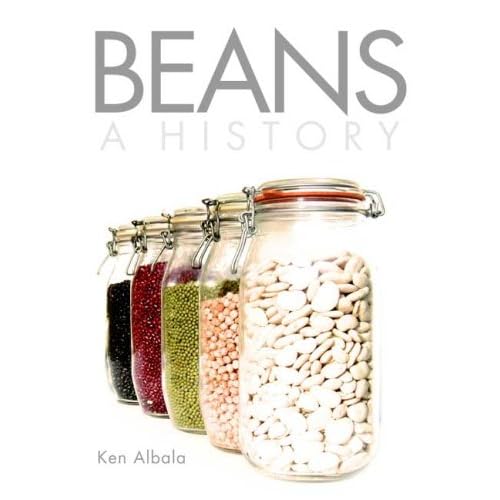
You ever find yourself reading some Pollan and thinking to yourself, "sure, this is entertaining, but I really wish he didn't dumb everything down for the lay audience"? Yeah, me too.
If Michael Pollan is coffee, Ken Albala is espresso. Ken is an award-winning food historian and author of such effervescent reading as Eating Right in the Renaissance; Food in Early Modern Europe; and Cooking in Europe 1250-1650. More recently though, he dabbles in what he deems to be "pop" food writing, but is, in my opinion, a meticulous examination of individual foodstuffs.
Beans is one such exploration, in which Ken chronicles the cultural and culinary significance of one of our most basic forms of sustenance, the humble legume. From the crippling classism faced by Medieval bean-eaters, to the role of toxic vetch seeds in combating famine in the 12th-century, to the bacterium that distinguishes natto from hamanatto, Beans delves into depths rivaling a thesis for its attention to detail, and for leaving no stone unturned. Beans is, in a word, thorough.
It's also pretty fucking entertaining, although I'll admit that the thing I like most about this book is its unflinching nerdiness. This is an entire book about the seeds of a single plant family. It's not just for scholars and botanists, though - Ken's enthusiasm is contagious.
Some of you are still doing your holiday shopping, and I scold you for your procrastination. However, you can satisfy the academic foodie on your list (or yourself) by picking up a copy of Beans or Ken's latest tome, Pancake: A Global History.
**********************************
Oh, hey, and speaking of beans, I made it to the store yesterday. It really wasn't that terrible - without that nasty sumbitch Old Man East Wind, it was actually kind of pleasant, bordering on magical.
 Since I knew I had to carry everything I purchased, I made very edited choices. Milk, eggs and flour are already heavy, so everything else really had to count. A couple containers of frozen juice concentrate to drink with our vodka. A bag of pink beans.
We had everything else at home, so this wouldn't be too difficult. Catherine sent me a huge elk sirloin roast a few weeks ago (have I mentioned that I love that woman?), from which we'd eaten a couple of steaks and then refroze. I'd normally never refreeze a meat, but I was going out of town and figured it'd be better to risk freezer burn than for the whole thing to rot in my absence. Rubbed and double-bagged with the air smooshed out, it was absolutely fine rethawed, without a single indication of freezer burn.

I finely diced the elk and browned it with an onion and a few spoonfuls of homemade ancho chile powder, half spoonfuls of pimentón and garlic powder, and a good few pinches of homemade Berbere spice. I dumped in a can of tomatoes and the leftover tomato-roasted pepper soup from last week. Then I added a dribble of soy, a spoonful of gochujang and a few good pinches of MSG. Oh, don't look at me like that - it is pure, crystalline umami. It makes everything taste really good and I'm not sensitive to it.
I let everything simmer and stew while the (presoaked) pink beans cooked in unsalted water. Never cook beans with the tomatoes or in salted water, or they'll go tough. When the beans were tender, I drained them and added them to the pot, then added more salt and pepper to taste. While the beans were soaking up some of the good chili flave, I whipped up some cornbread.
 Top with cheese, sour cream and minced shallot for best effect. I'm heading to the kitchen for some leftovers right now. Not too shabby, this "working from home" business.
Monday, November 10, 2008
Steak and chanterelle pasties with brown gravy and glazed carrots
 I swear, I've almost worked through all of my chanterelles. I'm actually getting tired of eating them, being too much of a good thing. I've been craving pot pies and brown gravy and all that, and thought I'd give making pasties a go. It's pretty much just an empanada, so I used the dough recipe from last year's buffalo and chanterelle empanadas with mole.
I diced up some chuck steak, coated it in a little flour and browned it with some onion. This made a sticky (but savory-smelling) mess in the pan, so I removed the brown steak and added the chanterelles. Chanterelles, like all mushrooms, are almost all water and release copious liquid when cooking. This liquid deglazed the pan nicely and stirred up into thick gravy with the toasty brown fond-roux. I added some finely chopped thyme and rosemary, a squirt of Worcestershire and some salt and pepper, and stirred in one diced, boiled Yukon gold potato. I spooned the filling into rounds of dough, sealed the edges with a little eggwash and then pinched the edges up into cute little pocket pies. I sloppily brushed the remaining eggwash on top of the pasties to brown and sent them to a 400 degree oven for about 30 minutes.
Meanwhile, I peeled and sliced some Sweet Nantes carrots and browned them in a little butter and sugar, then added a splash of chicken stock and simmered over a low flame until the carrots were tender and shiny. I added a pinch of kosher salt and fresh-crushed celery seed. The gravy was just beef stock (fortified with a bit of veal demi) shook up in a jar with some flour and simmered until the flour cooked and thickened. The crust was nice and flaky, unlike the leaden pasties served up at the Horse Brass (who have the best fish and chips in Portland, but terrible pasties), and the silky gravy not at all like library paste. The filling was tender, moist umame. I'll definitely make this again.
Sunday, October 26, 2008
Foodbuzz 24, 24, 24: Hunter, Gatherer, Vintner


October is the month of the Eat Local Challenge, and while I don't subscribe fully to the notion that we should necessarily restrict ourselves to procure all of our food from a 100-mile radius (I like cooking with salt and pepper, thankyouverymuch), I sometimes forget that I really don't have to. I live in the Pacific Northwest.
October also happens to be the season of chanterelles, deer and elk hunting and the fall runs of coho and Chinook salmon. An Indian summer has granted the sunshine a bit of stay, and I wanted to celebrate the meibutsu bounty of the Pacific Northwest (and some of the reasons I've never seen fit to leave my hometown). Yesterday, I threw a dinner party for 12 of my best friends and colleagues to share the bounty and praise our good fortune for living in paradise. We are a ragtag group of naturalists, foodies, hunters, gatherers and vintners.
I am also delighted to be one of the selected bloggers to be accepted by Foodbuzz to participate in their (now monthly) 24 Meals, 24 Hours, 24 Posts series.
 Norm (top photo) from Eat or Die is the Vintner mentioned in the title of this post. He and his lovely ladyfriend Gretchen couldn't keep their hands off each other all day. Danni, Janelle and Tammy (bottom photo, rear to front) set up the table with the floral arrangements made by Danni and Tammy from flowers in their gardens.
 Norm brought the gorgeous Pinot Noirs: 2003 Domaine Drouhin Laurène, 2004 Resonance Sineann, 2003 Ken Wright Eason, 2004 Boedecker Stoller, and homemade Pinot Noir (2005 and 2006 Chien Fâché) and Cabernet Sauvignon (2006 Ash Hollow) that he and some friends of his made from Yamhill and Walla Walla County fruit. His pairing with my planned meal was truly inspired, and I look forward to tasting (and purchasing!) some of next year's batch. Detailed tasting notes and afterthoughts are available at his blog.


 This was the setup that Janelle and Flori provided for me: a gas cooktop, a gas grill and a smoker. I couldn't have been happier. In fact, I couldn't have planned for a better venue for this dinner if I had a $5000 budget. When I though of this dinner, Janelle's house was the first place that popped into my mind. I told her my idea, and asked if we could have it at her house, sight unseen. All I knew about her house was that it was in the woods in Sandy, Oregon (about an hour southeast of Portland). When she said yes, I wasn't anticipating the idyllic scene of black-capped chickadees, cedar shakes and woodsmoke, but was thrilled.
 Flori carved the table legs and stools with a chainsaw, mere days before the dinner, and milled the wood for the tabletop himself. The trees etched into the legs of the table are testament to his craftsmanship.
My menu was planned to show off the best of the northwest:
Hors d’oeuvres
Charcuterie plate of house-made coho “loukanikos” & Fraga Farm saganaki
Soupe
Curried chanterelle bisque with cardamom crème fraîche
Salade
Baby spring greens with golden beets, Silver Falls Creamery chèvre
dressed with hazelnut-Pinot vinaigrette
Elk roast with alder smoked chanterelles & juniper-Pinot jus
Side of coho salmon with arugula-jalapeño pesto
Pan-fried Klamath Pearl potatoes with thyme and parsley
Grilled homegrown pattypan squash and green tomatoes
Chanterelle & cranberry ragout on toasted polenta points
Fromage
Grilled Hood River D’Anjou pears
& Rogue Creamery Oregon Brand Blue Vein raw milk blue
Dessert
Hood River D’Anjou pear and Gala apple galettes with homemade Douglas-fir needle ice cream and toasted hazelnut brittle


The saganaki was a pan-fried raw goat's milk feta from Fraga Farm in Sweet Home, Oregon. I'd never made saganaki before, but next time I'll cook the whole wedge in one piece instead of in thick slices. A drizzle of olive oil and fresh oregano and parsley from the garden finished the plate.
 Turns out, crème fraîche is dead-simple to make at home. Just add a couple tablespoons of buttermilk to a cup of heavy cream, loosely cover it with a paper towel or cheesecloth, and leave it out in a warm place overnight or until slightly thickened. The cultures in the buttermilk will thicken the cream and prevent bad bacteria from growing. Stirring in a little cardamom makes it a perfect accompaniment to creamy curried chanterelle bisque (thickened with a sweet potato and butter).
 Roasted golden beets and toasted pumpkin seeds provided the earthy backdrop to fresh Silver Falls Creamery chevre and bright baby spring greens. A light vinaigrette of hazelnut oil, Pinot Noir vinegar (made by Norm) and Pinot-stewed prunes (pureed with a little dijon mustard) was all this salad needed to become a work of art.


 The elk for the roast was hunted by Flori's cousin, the coho was fished by Flori, the tomatoes and pattypans were grown in my garden, and we picked the chanterelles earlier in the day. The potatoes and cranberries were store-bought, but grown here in Oregon.
Elk is slightly more sinewy than deer venison, and benefits from a slow braise. This roast took 5 hours in a 180-degree bath of beef stock, shallot and garlic, and was served with a jus I made from Pinot Noir (a bottle simmered down to a cup), veal demiglace and juniper berries. I ended up pouring some of that unctuous jus over just about everything on my plate.
And in smiling fortune, this time the chanterelles were everywhere. We went up some Forest Service roads in the Mt. Hood National Forest, where the white fir and Pacific rhododendron provide the perfect backdrop to a foray. Only weeks earlier (say Janelle and Flori) the huckleberry bushes were nearly bowed over under the weight of all the fruit, but it looks like we missed our window to black bears readying for a long nap.
 The cheeses were both delectable tastes of different parts of Oregon. The Willamette Valley Cheese Company's Brindisi (an aged fontina) came from Salem (only 45 minutes south of Portland), and the Rogue Creamery Oregon Blue (a raw milk blue) from Central Point (in southern Oregon, near the spot I found porcini and morels a summer ago). These were both full-flavored cheeses that stood up well to grilled pears.
 My standard galette needed no update other than to be paired with my latest pride and joy, Douglas-fir needle ice cream (although Brent was enamored of the galette for its pie-like characteristics. "It's like a tiny pie," he cooed). The piney tree notes were very subtle, almost indiscernible after the first bite, as were the hints of rosemary and pink peppercorn that I added to the simmering cream to reinforce the forest flavor I desired. I will make this again, but next time I think I'll double the amount of Doug-fir and leave crushed pink peppercorns strewn throughout the ice cream. I think the cream and egg yolk can stand up to it.
The hazelnut brittle is like the Butter Brickle you might remember from the so-called ice cream, or the crunchy toffee interior of a Heath bar, but with a toasted hazelnut skeleton. I made a hard-crack candy of sugar and bourbon, and added a knob of butter for good measure. When it was golden, I poured it over a buttered Silpat of hazelnuts (that I toasted and roughly peeled beforehand) and sprinkled on some flakes of Maldon sea salt. I still have a bag of this delicious candy for future praline (or premenstrual snacking).


 I think I've just found a replacement for all future holiday meals with my erratic family.


 Posts
Posts


